


‘This is How Cities Implode’: Qld’s Affordability Time Bomb

Queensland’s affordability train has pulled out of the station.
And thousands of people are still crowding the platform—among them the growing ranks of the “working homeless” including key workers such as nurses, paramedics, school teachers, hospitality and retail staff.
All of them employed but priced out of a runaway housing market—with an increasing number sleeping in their cars and showering at 24/7 gyms.
Just three years ago, about 43 per cent of median-income households in Australia could afford to buy a median-priced home.
Today, according to PropTrack’s 2026 Housing Affordability Report, that has collapsed to 14 per cent.
“This is how our cities will implode…if we don’t get our act together.
“They won’t be able to find key workers. They’ll have to pay more for them… those costs get transferred onto customers, [which] keeps inflationary pricing going up, and it’s just a vicious circle. It just fuels itself.”
That’s how Community Housing Industry Association Queensland chief executive Julie Saunders sees it.
Her warning comes as the association launches Queensland’s first community housing partnership prospectus—a pitch to developers, investors and interstate providers to get on board to help build the next line.
The numbers are stark. Queensland needs an additional 53,500 social and community homes by 2044. About 4500 have been delivered and roughly 6000 are under construction. It still needs about 2000 completions a year for the next 18 years. Last year it managed 1500.
But therein, Saunders says, lies the opportunity.
‘Scale is opportunity’
“Our biggest challenge, and opportunity, is scale,” she says.
“The community housing sector is one of Queensland’s most important growth stories…but to do 2000 homes year-on-year for the next 18 years is a challenge.”
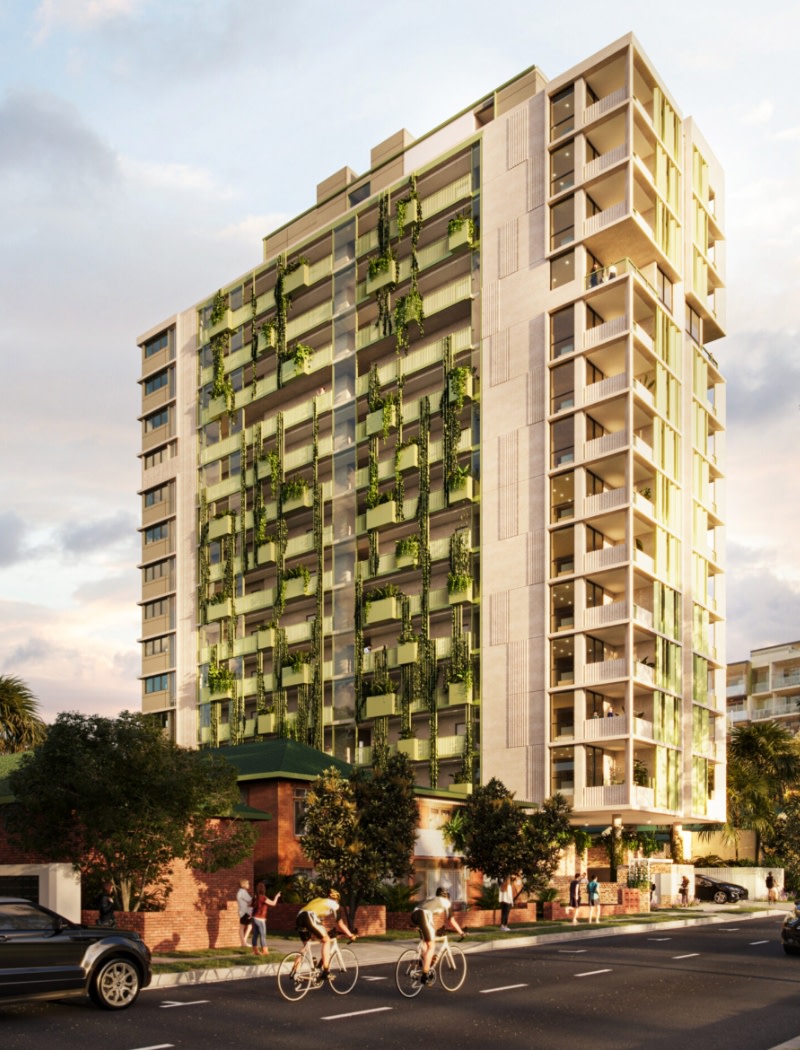
▲ A rendering of Sage Apartments, a development by social and affordable housing provider BHC, at inner-city Brisbane's Woolloongabba.
Queensland starts from behind, she says.
Unlike other states, it missed out on transfers of public housing stock to community housing providers (CHPs) a decade or more ago. That has left the sector’s balance sheets comparatively thin.
Government funding is flowing, but public money alone won’t close the gap. The sector needs delivery and capital partners if it is to scale up and make a lasting impact.
“We need to sweat the bucket and use as much of the market capital wherever it might come from, not just government funding, to deliver what we need,” she says.
“The sector can’t do it alone … we need partners to help us build.”
About 98 per cent of Australia’s housing is built by the private sector. Saunders says interest in community housing is building from developers of “all shapes and sizes”, particularly those choosing between selling their sites or pivoting in the current landscape.
Private sector stepping up, but there are hurdles
Many prefer turnkey deals: the developer builds the project and carries the construction risk, then a CHP buys it on completion with government funding behind the purchase. So there are no pre-sales to chase and no price risk at the end.
“They mightn’t get the same return but the risk profile is diminished as well,” Saunders says.
Scale, however, remains the bigger goal, and it is not capital that’s holding the sector back.
Risk appetite and returns are the problem. Super funds, bound by statutory fiduciary duties, cannot yet accept the lower yields but Saunders says Canberra has agreed to look at loosening those requirements. What institutional money needs most is a pipeline.
“They won’t crowd in until you get scale.”
Costs and red tape a handbrake
Meanwhile, material and labour costs are the other big drag on the pipeline.
Then there’s the red tape. Because CHP projects carry government money, they face far more compliance than other developments.
“The hoops that the CHP sector has to go through versus a commercial development are so more rigorous, and they don’t need to be,” Saunder says.
Traders in Purple director Charles Daoud agrees.
“Residential development is really difficult ... and when you add social and affordable housing, it introduces significant additional complexity. You’ve got other stakeholders you’re managing as part of the process, and the funding is very different to traditional funding,” he says.
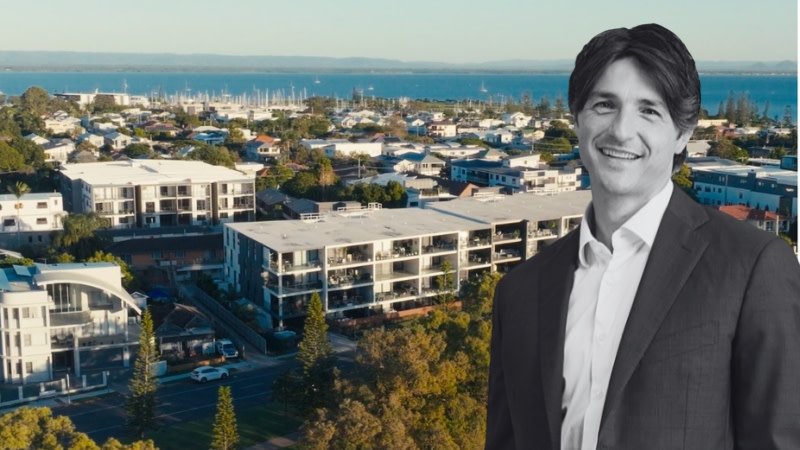
▲ Charles Daoud, Traders in Purple director, has delivered integrated social, affordable, and private housing across New South Wales and Queensland.
After 15 years in affordable housing it now makes up about 20 per cent of the Sydney-based developer-builder’s workbook.
“The problem with the private development industry is that it just doesn’t understand what it means to deliver social and affordable housing,” Daoud says.
He cautions that it’s “not for the faint of heart” and not a quick, one-off way for a developer to exit a site.
“If you’re looking at it from the point of view of how do I monetise this and make it as feasible as possible, you’re starting from the wrong spot.
“Because you could have the best building in the world but if it doesn’t suit a certain cohort that needs it in that particular area, then you’re not going to be successful.
“You really have to understand who you’re building for, and the difference you’re making in their lives, and that often leads to better design and better outcomes overall…because you’re actually more likely to get it funded.”
Gold Coast at the coal face
Saunders says while the housing affordability crisis is being felt statewide, the Gold Coast is where it hits hardest in Queensland and Brisbane is heading the same way as the problem “bleeds beyond the boundaries”.
“It’s everywhere but I think on the Gold Coast it’s amplified and on another level…it’s tanked, absolutely.”
She points to a technical report behind the city’s growth strategy that forecasts the number of households requiring housing assistance will hit 66,400 within the next two decades.
“And that hasn’t transferred into their strategy at all…the Gold Coast City Council doesn’t even provide an infrastructure discount to CHPs. And their rates are some of the dearest in the state.”
Saunders is blunt about where that potentially will lead.
“I do look at San Francisco and go…that is the Gold Coast in 20 years,” she says, referring to the extreme affordability crisis driven by the tech and AI booms injecting massive wealth into the US city.
What is affordable housing in Australia may well be defined by the High Court following the Queensland Court of Appeal overturning the approval of an uplift in building height relating to a high-end tower proposal on the Gold Coast.
The city’s planning scheme allows height uplift bonuses if projects satisfy specific criteria, including improving “housing choice and affordability”.
But the court ruling in July deemed that classifying luxury apartments as a benefit to housing affordability “would be a distortion of the ordinary meaning of affordability”.
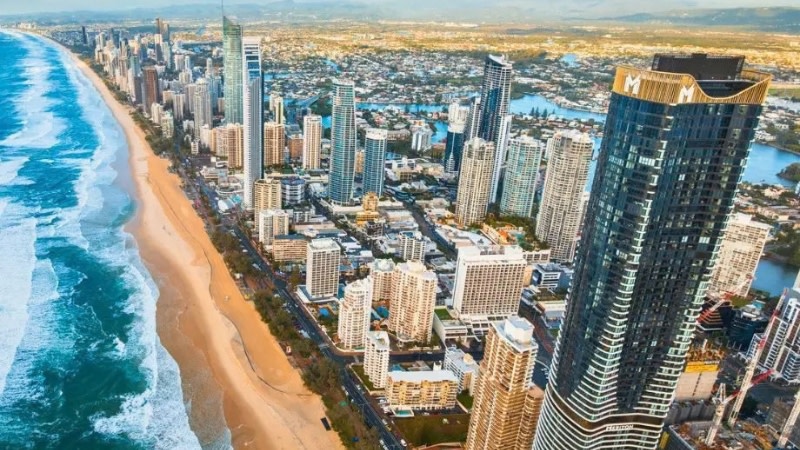
▲ The housing affordability crisis has hit the Gold Coast hardest as the city's luxury residential development boom continues.
The council has applied to the High Court of Australia for special leave to appeal the decision, which has thrown the provisions into chaos threatening up to $5.5 billion worth of highrise projects across the coastal strip.
Daoud says Australia is struggling to deliver “housing for the masses”.
He uses a car market analogy. “There is definitely a place for people who make Toyotas. More people drive Toyotas than Mercedes. And the problem is, all we’re making [in terms of housing] is Mercedes at the moment.”
But he believes more developers will eventually pivot away from luxury development.
“As they understand [the sector] more, it will come,” he says. “We’re not quite there yet but we will get there and I think more developers will enter this space as it’s getting harder and harder even to make luxury projects work at the moment, given market conditions.”
And when that shift does occur, Daoud says, Queensland is “certainly a much better place to be doing it than other states in the country”. He says its rolling program means funding will be there for projects in future years, while “the other states really suffer because their programs are few and far between”.
The demand for social and affordable housing in Queensland is also bigger than the headline target suggests, Saunders adds. She says the social housing register criteria are some of the toughest in Australia, and pensioner couples are ineligible.
Community housing is “like the salami in the sandwich”, she says, caught between layers of government bureaucracy. Add to that the challenges of a housing market Saunders describes as stuck at a tiping point and “in paralysis at the moment”.
“It’s going to take a mighty effort and some big levers to shift… and the 53,500 homes is just the tip of the iceberg.”
*This post was originally published on (https://www.theurbandeveloper.com/articles/this-is-how-cities-implode-qld-s-affordability-time-bomb?utm_source=piano&utm_medium=email&utm_campaign=dailybriefing&pnespid=8e7Ny9VIv7rI4LC9tA6jv6EI9UkGrSl7gwpzAhE66VKVXMvoYJaaoAds_fpSOkMHzmneYSSY6w)
You might also be interested in
Oct 9, 2026
Overvalued, Not Overheated: Brisbane’s Property Paradox
Brisbane is over-valued, but the bubble is not going to burst before the Olympics, according to new long-range data analysis. Brisbane’s runaway property growth over the past five years has pushe
Sep 9, 2026
Ex-Olympic Village Site to Supercharge Brisbane’s Inner-North
The banks of the Brisbane River once destined to house the world’s elite athletes during the 2032 Olympics are back on the development starting blocks in a move predicted to supercharge the city’s i